

By William Hanson
Current Workforce Landscape
Albert Lea’s labor force shows a workforce in transition. About 75% of adults ages 18–64 are employed, with unemployment recently hovering near 5½%. Manufacturing remains the largest employer category—consistently accounting for over one‐fifth of workers—while health care and social assistance also employ a large share of the population. Fewer people are working in agriculture, information, and finance sectors. Earnings vary significantly, with roughly half of workers earning $40,000 or more annually. Many working locally commute short distances, suggesting a largely self‐contained employment ecosystem.
Shifting Local Business Terrain
Cannabis Licensing Evolves
Albert Lea has recently expanded the number of permitted cannabis businesses. The city council increased the cap from two to four, approving licenses for Big Dream Organics and Aficionados, LLC. Two other registered businesses—Matchbox Farms and Black Husky—are already moving toward opening. Regulatory reviews, including criminal history, have played a decisive role in approval outcomes.
Downtown Revival with Tangible Impacts
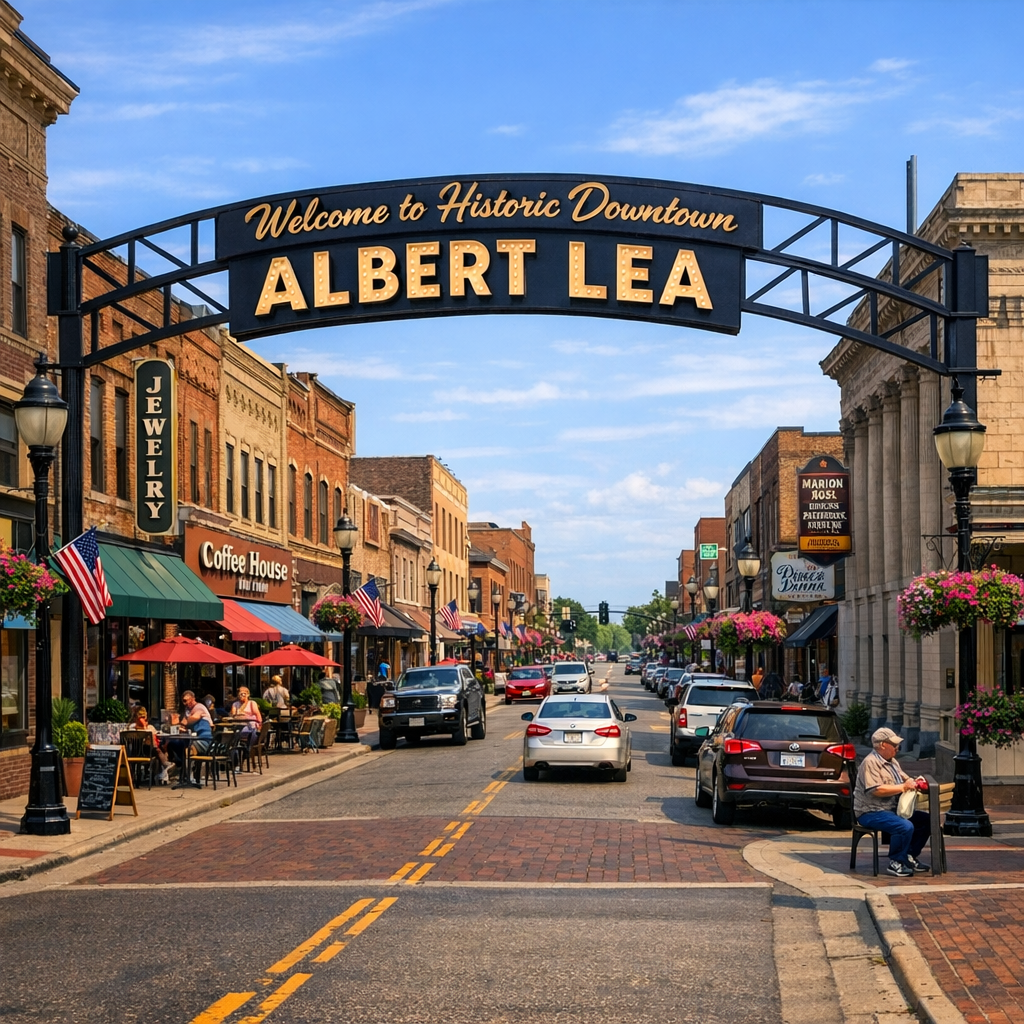
Downtown Albert Lea is showing signs of economic revival after deliberate urban investment. Streetscape improvements have enhanced pedestrian safety; public spaces now host arts events, markets, and live music. The result: greater foot traffic, rising property values, and new businesses choosing Broadway Street as their base—all signaling confidence in the downtown corridor.
Opportunities for Entrepreneurs
For entrepreneurs eyeing local opportunity, sectors associated with aging populations, health care, and services aligned with community well‐being are especially promising. Similarly, businesses that hope to locate near enhanced transit, trails, or gathering spots downtown may find extra value. The rising cannabis market—now with more open licenses—offers new entrants pathways, though navigating the regulatory environment remains essential.
Challenges to Navigate
One persistent challenge is broadband access and infrastructure readiness; newer industry types often expect fast, reliable internet, and gaps in infrastructure could deter firms. Educational attainment is another area for improvement, especially for higher‐skill sectors. Moreover, certain reactive industry sectors—where employment has declined—suggest risk for businesses tied to older production or agricultural models without diversification.
What Entrepreneurs Should Do
- Engage with local development agencies to learn about grants, licensing, and infrastructure resources.
- Design business plans that respond to changing community dynamics—prioritize wellness, downtown vitality, sustainable services, or recreation.
- Ensure compliance with licensing and background requirements early—especially in regulated industries like cannabis.
- Evaluate remote customer access or e‐commerce to hedge against shifts in foot traffic or retail trends.
Albert Lea is not frozen in the past—it’s growing, shifting, and finding new ground. For entrepreneurs willing to adapt and integrate, there are real possibilities in this community.